APSARD Newsletter – April 2024
The APSARD April 2024 Newsletter is now available! Click the button below to access.
The APSARD April 2024 Newsletter is now available! Click the button below to access.
On June 13th, 2024, the US Department of Justice announced a federal health care fraud indictment against a large subscription-based telehealth company that provides attention-deficit/hyperactivity disorder (ADHD) treatment to approximately 30,000-50,000 patients across the United States.
As per the US Department of Justice: “Ruthia He, the founder and CEO of Done Global Inc., was arrested in Los Angeles and David Brody, the clinical president of Done Health P.C., was arrested in San Rafael, California” for allegedly “developing and carrying out a $100 million scheme to defraud taxpayers and provide easy access to Adderall and other stimulants for no legitimate medical purpose.” As alleged in the indictment, “the defendants provided easy access to Adderall and other stimulants by exploiting telemedicine and spending millions on deceptive advertisements on social media. They generated over $100 million in revenue by arranging for the prescription of over 40 million pills.“
At the same time, the CDC issued the statement “Disrupted Access to Prescription Stimulant Medications Could Increase Risk of Injury and Overdose,“ which discusses the need for ongoing access to care and the potential disruption to as many as 30,000-50,000 patients ages 18 years and older across all 50 US states.
Within hours, the CDC hosted a meeting of the “ADHD Partners” to discuss these issues and the impact on the communities affected by ADHD. This meeting included Stephen Faraone from the World Federation for ADHD, CHADD leadership, the president of ADDA, ADHD coaches, other affiliated organizations, and me, from APSARD.
The overarching theme of this meeting was the need for holistic ADHD care, the pivotal role of APSARD and our affiliated ADHD organizations in decreasing stigma and improving equitable delivery of education and ADHD care.
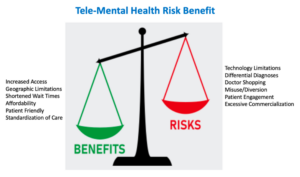
I would like to share a resource which was just E-published in CNS Spectrums, ahead of print last week, which utilizes an “Expert Consensus Statement” on the strengths and limitations of telemedicine for ADHD management and care.
All in all, these updates highlight the pivotal role of APSARD as the leading voice for implementing ADHD science, education, and advocacy for individuals with ADHD.
Appreciatively,
Greg Mattingly MD
President, American Society for ADHD and Related Disorders
Supporting Links:
Disrupted Access to Prescription Stimulant Medications Could Increase Risk of Injury and Overdose
Expert Consensus Statement for Telepsychiatry and Attention Deficit Hyperactivity Disorder
Key Findings:
In this issue of Psychiatric Annals, we will present four articles summarizing issues in the development of United States (US) guidelines for the diagnosis and treatment of adults with attention-deficit/hyperactivity disorder (ADHD). The American Professional Society of ADHD (APSARD) is currently in the process of developing such guidelines, which will be the first such recommendations for US clinicians treating adults with the disorder. Of note, there are multiple US guidelines for childhood ADHD, including those from the American Academy of Child and Adolescent Psychiatry (AACAP) and the American Academy of Pediatrics (AAP). Multiple international organizations have developed guidelines for the diagnosis and treatment of ADHD, including adult ADHD, such as the National Institute for Health and Care Excellence (NICE; United Kingdom) and the Australian ADHD Professionals Association (AADPA). These guidelines outside the US particularly highlight the need for guidelines for adults in the US. Furthermore, such guidelines are important for both patients and clinicians as: (1) adult ADHD is often undiagnosed and untreated, at significant cost to the patient and to society; and (2) the guidelines will provide the latest evidence available to clinicians caring for patients with adult ADHD so that they and their patients can make the most informed decisions.
This issue starts with an article by Dr. Deepti Anbarasan and colleagues that reviews the development of quality measures for adult ADHD as a step along the way toward creating guidelines. Dr. David Goodman and Dr. Greg Mattingly then discuss the process of guideline development in the second article. The third article, by Dr. Thomas J. Spencer and colleagues, describes the process of conflict-of-interest management in the development of adult ADHD guidelines. The issue concludes with an article from Dr. Ann Childress and colleagues on the importance of the development of US guidelines for the diagnosis and treatment of adult ADHD.
Watch the teaser video to learn more: NYT article 052024 teaser video.mp4
Read the full statement:
https://journals.healio.com/doi/10.3928/00485713-20230911-06
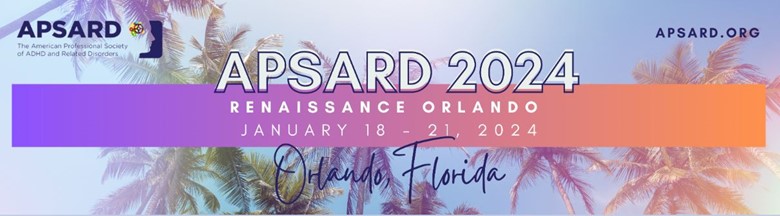
The members are the judges! From the feedback we’ve heard, APSARD 2024 went very well with a strong line-up of presenters sharing interesting and important science.
From attendees:
Here are some highlights:
An update on the Adult ADHD Diagnosis and Treatment Guidelines process was shared Friday morning by Dr. David Goodman and audience questions were received for consideration in the ongoing process. This is an important initiative, and the committee was grateful that APSARD members were able to share some of their thoughts. See here for the latest news on the guidelines development.
Drs. Maggie Sibley and Luis Rohde provided stimulating presentations on the complexities of ADHD in adulthood that are especially pertinent given the prevalence trends in the literature documenting dramatically increased prescribing for adults and especially women. Multiple factors are important to consider including the fluctuating course of ADHD throughout life and the impact, both positive and negative, of social media on ADHD awareness. A clinical take-home point is that assessment in adulthood is complicated by the need to rule out multiple alternative and co-occurring causes of ADHD symptoms; thorough assessments are critical.
Dr. Susan Young delivered a lecture on ADHD experienced by women with an emphasis on distinct clinical presentations important for consideration in diagnosis and treatment underscored by personal narratives shared by the women in her research. Recognizing the more subtle and internalized presentation of ADHD amongst women, and individualizing treatment goals, is important.
Drs. Brooke Molina and Tim Wilens presented recent data on connections between stimulant treatment, misuse, and risk of other harmful substance use, showing an absence of harmful substance use in adulthood amongst children treated with stimulants for ADHD yet increased risk when stimulant treatment is initiated in adolescence and especially in the presence of stimulant misuse. The findings underscore the need for monitoring of substance use risk when stimulant prescribing is initiated at older ages.
Drs. David Coghill, Steve Faraone, and Luis Rohde provided very interesting international perspectives on the implications of, and necessity for, national guidelines on the diagnosis and treatment of ADHD. The discussion provided insight into differences across countries in diagnosis and treatment cultures, service availability, and policies that drive availability of evidence-based care.
Drs. Brandy Callahan and David Goodman presented the state of the science on cognitive aging and ADHD, helping the audience understand the complexities of diagnosis in older age as well as the increased risk of accelerated brain aging amongst individuals with ADHD. Assessments should include a thorough medical evaluation to consider all possible causes of cognitive complaints before diagnosing ADHD, but once diagnosed, ADHD treatments can be just as effective for older adults as for younger adults.
From several more attendees:
APSARD has been very fortunate to include international perspectives throughout our meetings and the 2024 meeting was no exception with other talks including representation from Japan (Drs. Gail Tripp, Emi Furukawa, Patricia Bado, & Shizuka Shimabukuro), in addition to presenters noted earlier (Callahan, Canada; Coghill, Australia; Rohde, Brazil; Young, UK). Clinically, it is clear that cultural differences in perspectives about mental health can and should be taken into account when diagnosing and treating ADHD. Training in cultural competence is one important way for clinicians to accomplish this (e.g., Center of Excellence for Cultural Competence).
Drs. Faraone, Angelika Claussen, and Melissa Danielson provided updates from the CDC on trends in care utilization and medication use by adults with ADHD and underscored the need for additional research on underserved populations and education for people with ADHD, their families, and their healthcare providers.
In addition to these invited presentations, multiple symposia were extremely well-attended and led to lively conversations about ADHD and cannabis use, developing parenting interventions in Japan, understanding the comorbidity of reading disorders and ADHD, medication selection for adults with ADHD in light of psychiatric comorbidities, the role of sleep in ADHD and comorbidities, school interventions in the digital era, advances in digital therapeutics, advances in models of clinical care delivery for children with ADHD, and the association between ADHD and genetically driven inflammatory disorders. ADHD 201, held pre-conference on Thursday, was standing room only and will definitely be in a bigger space next year!
Finally, the meeting was filled with stimulating conversation across disciplines, with clinicians and researchers informing one another with their perspectives and questions. Relatedly, Table Talk and the Special Interest Group meetings were well-attended and will be continued at APSARD 2025 in San Diego where we hope to continue these conversations!
More feedback:
From a new attendee nurse practitioner (NP):

Brooke Molina, PhD
APSARD Program Planning Committee Chair, 2024