ADHD and Brain Imaging – Improvements for Diagnosis and Care
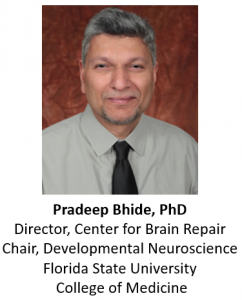
I have collected neuro-imaging data over the years on how the brain processes opportunities to respond to rewards as well as notification of having received awards, and also the brain activation and response to the threat of penalties such as going for too much reward, when you should stop earlier. I am interested in how these brain signatures can relate to a couple of things.
First of all they may address different theories about what makes the addictive brain different. For example a theory holds that there is a reward deficiency in people who are addictive because of genetic characteristics, and/or from chronic use of substances use such as alcohol. The addictive person’s brain is relatively unresponsive to non-drug rewards. Another theory is more of an impulsivity theory that distinguishes people who get into drugs, and especially who lose control over substance use once they start, as impulsive. They’re characterized either by an exaggerated pursuit of rewards generally or some combination of that with an insufficient frontal cortex control over behavior. My work has been in adolescents and adult participants.
I would say on the whole my data are consistent with more of an impulsivity hypothesis but I would certainly welcome other clinicians and researchers to draw their own conclusions.
This work is very relevant to ADHD. We are trying to move away from diagnostic nosologies (classifications of diseases) and more toward a focus on circuit-level abnormalities; more focus on phenotypic abnormalities. There is a long pedigree of various papers in the literature, talking about the comorbidity between ADHD and oppositional defiant disorder, or between conduct disorder and so forth. That approach may become a bit outmoded as this circuit level approach becomes more in vogue.
One thing that is under-appreciated is that the brain is connected to itself across regions. The population of those with ADHD is distinguished by a separate connectivity pattern. If a patient presents with a more emotional-reactive or hot profile, whether you call it ADHD, emotional defiance, OCD, or whatever, he or she is at particular risk for substance abuse. Given the already published literature, I would contend having emotional aberrations alone is a risk factor for addiction.
Our ability now to measure brain patterns and connectivity will provide improved tools for diagnosing and treating disorders, emotional disturbances, risks for addiction, as well as developing reward structures that work, compared with the more classic labeling that we have relied on until now.
I conduct research on the connection between ADHD and substance abuse. My research started about 20 years ago when researchers began to be interested in a possible link between these two problems. As we started to dig into it, we discovered that indeed there is a connection but what remains somewhat complicated is the extent to which there is a connection. So, just how much are these children at risk for which substances; alcohol, marijuana, cigarettes. When they are at risk, why? I’ll be talking about that.
I am asked if this applies to adults, and absolutely, it applies to adults. Much of our research has actually been following these children into adult to understand how long this risk lasts. Some folks have the apparent risk at different stages in their lives. Depending on how you study the question, it shows up differently at different ages. That’s the developmental component to my research.
As a result of part of our research, some people were surprised that we found that the most common treatment for ADHD, stimulant medication, did not have a clear and strong signal for preventing substance abuse. Some studies are showing that it helps. Some studies are not showing anything. The good news is that it doesn’t appear to be visibly be harming children or to be escalating their risk for abuse. In other words, we’re not seeing that stimulant medications spur on the use of drugs or alcohol, and that’s good news.
An important question arises when one considers the risk for substance misuse in teenagers vs. adults. Our research has focused quite a bit on the developmental issues here because substance abuse changes as people age. It starts when teenagers are young but it doesn’t rapidly jump to an addiction or substance abuse. If you try to measure it that way, you might miss it. Substance abuse looks a little different depending on the age of interest. We are working hard to understand what that looks like at the different ages and what are the different factors that lead to this risk at the different ages? We think that might have important implications for prevention and for treatment.
There’s a new topic in ADHD, and it’s likely to be the next clinical frontier, and that is ADHD in adults over the age of 50. We never truly believed that ADHD stopped when the pediatrician discharged you, and it doesn’t stop when you get your AARP card or your Medicare card. We need to follow these people into adulthood. Now, many of these people have really never been diagnosed, having been raised in the 1950s and 60s. It really is quite a challenge for clinicians to identify ADHD in the older population. I think that it’s important for the clinician to have ADHD in mind when they’re doing their psychiatric evaluation. Often ADHD is missed because it’s simply not considered in the evaluation. ADHD in adults starts in childhood. The symptoms are chronic and relatively unchanging, and cause impairments over time. In the later years of adulthood, making the diagnosis gets more complicated because of age related cognitive decline. Although cross-sectionally it might look like it’s just age related, if you don’t go back and take the history, you miss the fact that this person has had chronic inattention, distractibility, disorganization, for virtually their whole life. That is the challenge to making the diagnosis. Does ADHD present in ways that are unique from aging? Not necessarily. The inattention is still a function of the disorder. They’re forgetful, they misplace things, they spend a lot of time looking for things, but at this age, when you have multiple responsibilities now with children, or grandchildren, and family, and managing finances and career, things that previously would have been relatively straightforward for an average adult become problematic. That is, paying bills on time, managing finances, remembering what bills you paid, what bills you didn’t pay, making return phone calls, and life just gets too complicated and burdensome. This leads to an increase in the amount of anxiety and depression that people have. We’re often presented with anxiety, substance abuse, depression, and other concomitant psychiatric disorders. Again, the clinician needs to know this exists in order to screen and ask the relevant questions. That’s really what our program is going to be at APSARD, to heighten the awareness for clinicians. It is often the case that adults are getting diagnosed for the first time in midlife, because if you were raised in the 1950’s and 60’s, these were bad, lazy kids who never got diagnosed. Now what happens for the later adults is, they see their grandchild get diagnosed, and then their own child, 35, turns to mom and dad and says, “You know, you guys look like you were this way my whole life. You always ran late, you didn’t pick me up on time, and we were always scattered and looking for stuff when we went on vacations. Maybe you should get evaluated.” I think it’s a new frontier because there are very few studies that look at ADHD in older adults. We just did a review that has been published before the meeting, and it’s a complete review of English published worldwide literature on ADHD over the age of 50. There’s a lot of good research out of the Amsterdam Group, but we’ve tried to put together all of this information to one article so that we can increase awareness and say what’s out there, and what the field needs to develop in the area of research and clinical skills. A press release for the review may be viewed here, for more information: http://www.prnewswire.com/news-releases/attention-deficit-hyperactivity-disorder-in-adults-over-age-50-a-mistaken-and-overlooked-psychiatric-disorder-in-the-aging-population-300195082.html
In our studies, we are using animal models of ADHD to gain novel insights into the neurobiology of this disorder. The ultimate goal is to translate our pre-clinical findings into the clinic by developing these molecules into drugs and see how they will benefit the ADHD patient population.
With my research, I’m often asked if animals have ADHD. With ADHD as a cognitive disorder, it’s very difficult to say whether a mouse for example has ADHD or not. However, that is not necessarily a disadvantage because we can perform behavioral analyses in these animal models that focus on components of the bigger ADHD syndrome. For example, working memory. Rodents (mice and rats) require working memory. We have specific behavioral tests that measure working memory, attention, hyperactivity, and impulsivity.
Smoking and ADHD: The animal model that we have developed is a pre-natal nicotine exposure mouse model. We chose that because the clinical research has shown that if pregnant women smoke cigarettes, or use tobacco products, the risk for ADHD in the child doubled. Nicotine exposure is a known environmental cause, or is associated with development of ADHD symptoms.
We have identified two or three molecules, novel molecules that underlie working memory and attention deficit. We have even tried to develop these molecules into drugs. Another new finding that we have is that the phenotypes, the cognitive deficits produced by the nicotine exposure are not only found in the offspring, but some of these behavioral phenotypes are transmitted to the next generation. The grandchildren of the mother who smoked exhibit ADHD-like behavior. The great grandchildren also displayed that behavior, even though only the grandmother actually was exposed to tobacco and nicotine.
Similarly in male mice, or fathers, that were exposed to nicotine, their children also show ADHD-like symptoms. These types of trans-generational transmission of the ADHD phenotype, or heritability of these cognitive deficits. That insight came because we used an animal model, as you can imagine to do this type of trans-generational study in people, even if it were possible, would take about fifty or a hundred years. In an animal model we can do this in less than a year.
It has been known for many years that ADHD runs in families. Twin, family, and adoption studies indicate that ADHD is common in first-degree relatives of children with ADHD, including many parents. In contrast to children with ADHD whose difficulties in school or at home lead to an ADHD evaluation, parental ADHD is much less likely to be detected if it has been missed previously. ADHD in adults can be easily misdiagnosed as another problem, sometimes the result of longstanding, untreated ADHD, such as substance use and demoralization. The problem of recognition compounded as there is much less awareness of ADHD among health and mental health providers who treat adults, since for years ADHD was viewed primarily as a pediatric condition. Until recently, there have been few studies to guide treatment of ADHD in parents, although it is also been established that parental ADHD can have a negative impact on behavioral parent training, a frequent first line treatment for ADHD in children.
Andrea Chronis-Tuscano and I began a series of studies investigating the effects of treating mothers with ADHD about 10 years ago. We first studied the effects of long-acting stimulant medications on maternal ADHD, and observed improvements in mothers’ ADHD symptoms and some improvements in parenting (e.g. there were fewer reports of corporal punishments at higher doses) (Chronis-Tuscano et al., 2008) (Chronis-Tuscano & Stein, 2012).
More recently, a large multisite study examined the impact of treating maternal ADHD with either 12 weeks of multimodal treatment consisting of methylphenidate and group psychotherapy or 12 weeks of clinical management (i.e., less intensive supportive counselling) prior to receiving 12 weeks of parent-child training (Jans et al., 2015). Multimodal treatment of ADHD in mothers was associated with improvements in maternal ADHD and mental health in general, however children whose mothers were treated with 12 weeks of supportive counseling displayed the same level of improvement in behavior as children whose mothers received multimodal treatment that included maternal stimulant medication. In this study, three-quarters of the child participants were already receiving stimulant medication, which may have reduced the potential for detecting effects of treating ADHD mothers on children who were already being treated (Stein, 2015).
Several years ago, we began a study of mothers with ADHD who have young children at risk for ADHD due to genetics and environment, with ADHD symptoms, who have not yet started treatment. This study, “Mothers First”, is testing whether treating mothers with ADHD first, with either stimulant medication or parent training, not only helps mothers, but also improves parenting and reduced or delays the need for medication in the child (Chronis-Tuscano, Wang, Strickland, Almirall, & Stein, in press). We are in the last year of the study at Seattle Children’s hospital, which is aimed at mothers with suspected ADHD who have 3-7 year olds with ADHD symptoms who are not taking ADHD medications. As part of the study, mothers and children are evaluated for ADHD and receive study treatments and monitoring. In addition, we are now beginning an extension study with fathers with ADHD, “Father too”. In this study, fathers will be treated with 8 weeks of stimulant medication or behavioral parent training. In this our first study with fathers, we look forward to comparing our experience with mothers to ADHD treatment and measuring the impact on parenting and on young children with ADHD.
We know now that ADHD is common in parents, and that treatment can make a difference in terms of reducing parents’ ADHD symptoms. We also know that pediatric and mental health providers seldom identify ADHD in parents, and that there is a paucity of adult providers trained in ADHD management. Consequently, it is often challenging to find providers who can treat parents with ADHD. Through our research, we hope to increase awareness of parental ADHD and learn how best to sequence treatment and differences between ADHD in a mother and father and how that relates to treatment of the child with ADHD. Eventually, we will recognize an ADHD family disorder that is not focused exclusively on the child or childhood years.
Chronis-Tuscano, A., Seymour, K. E., Stein, M. A., Jones, H. A., Jiles, C. D., Rooney, M. E., . . . Robb, A. S. (2008). Efficacy of osmotic-release oral system (OROS) methylphenidate for mothers with attention-deficit/hyperactivity disorder (ADHD): preliminary report of effects on ADHD symptoms and parenting. The Journal of Clinical Psychiatry, 69(12), 1938-1947. Retrieved from http://www.ncbi.nlm.nih.gov/pubmed/19192455
Chronis-Tuscano, A., & Stein, M. A. (2012). Pharmacotherapy for parents with attention-deficit hyperactivity disorder (ADHD): impact on maternal ADHD and parenting. CNS drugs, 26(9), 725-732. doi:10.2165/11633910-000000000-00000
Chronis-Tuscano, A., Wang, C. H., Strickland, J., Almirall, D., & Stein, M. (in press). Personalized Treatment of Mothers with ADHD and Their Young At-Risk Children: A SMART Pilot. Journal of Clincal Child and Adolescent Psychology.
Jans, T., Jacob, C., Warnke, A., Zwanzger, U., Gross-Lesch, S., Matthies, S., . . . Philipsen, A. (2015). Does intensive multimodal treatment for maternal ADHD improve the efficacy of parent training for children with ADHD? A randomized controlled multicenter trial. Journal of Child Psychology and Psychiatry, and Allied Disciplines. doi:10.1111/jcpp.12443
Stein, M. A. (2015). Does helping mothers with ADHD in multiplex families help children? Reflections on Jans et al Journal of Child PSychology and Psychiatry, 56, 1314-1315.

 I have collected neuro-imaging data over the years on how the brain processes opportunities to respond to rewards as well as notification of having received awards, and also the brain activation and response to the threat of penalties such as going for too much reward, when you should stop earlier. I am interested in how these brain signatures can relate to a couple of things.